Five populations, each with its own borders
A member who is hard to reach is usually blocked by something specific: a phone number that changed, a language, a missing ride, a fear nobody asked about.
The barriers differ by plan type, so the work does too. Here is how we approach each population we serve.




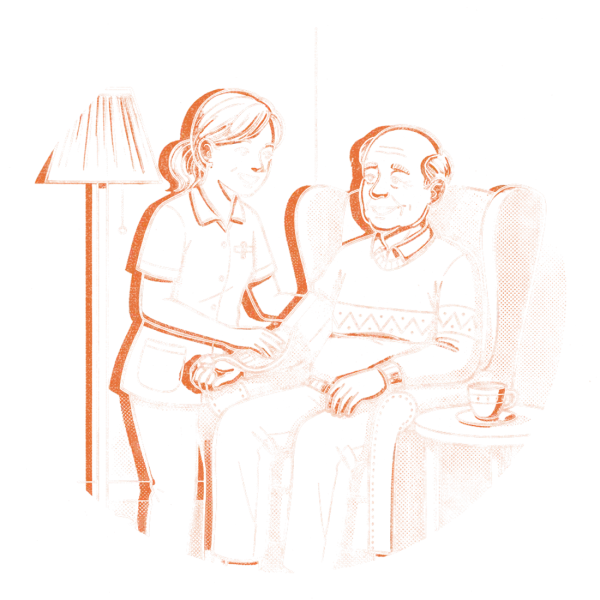
Medicare Advantage
Older members managing several conditions and several prescribers, often wary of one more unknown caller.
What gets in the way
- Several chronic conditions and several prescribers, with no one holding the whole picture
- Hearing, vision or mobility limits that make phone calls and trips harder
- A healthy suspicion of unfamiliar callers
- Caregivers who are central to decisions but hard to identify
What we do
A coordinator takes the time to explain, groups screenings into as few trips as possible, follows up on statin and blood-pressure refills, and makes sure conditions are documented at real visits so risk adjustment reflects the member’s health.
- 12:1 ROI for risk adjustment (RAF) A Medicare Advantage plan


Medicaid
Members whose phone numbers, addresses and work shifts change faster than any eligibility file.
What gets in the way
- Phone numbers and addresses that change often
- Hourly work and childcare that leave little room for appointments
- Food, housing and transportation needs that come before care
- Gaps that span a whole household: a child’s checkup, a parent’s screening
What we do
We keep contact information verified, address the social needs first, and work the household as a whole, so one trusted outreach closes several gaps and keeps members out of avoidable ER visits.
- 10% Reduction in total cost of care A Medicaid plan
- 19% Reduction in inpatient and ER utilization A Medicaid plan

Dual Eligible Special Needs Plans
Members with the highest needs and two sets of benefits to navigate.
What gets in the way
- Medicare and Medicaid benefits that are confusing to use together
- Multiple chronic conditions and frequent hospital transitions
- Social needs layered on top of medical ones
- Long gaps between a discharge and the next primary care visit
What we do
ADT feeds tell a coordinator when a member has been admitted or seen in the ER, so the follow-up starts with the transition. Coordinators help members use both sets of benefits and stay with them through the appointments that keep them well.
- +22 Weighted Star improvement A D‑SNP plan


Exchange and ACA plans
Members new to coverage, or new to using it, who need help turning a plan into a first visit.
What gets in the way
- No established primary care doctor
- Uncertainty about what preventive care costs, often nothing
- Coverage that changes from one year to the next
- Unscreened social needs behind missed visits
What we do
Coordinators help members choose and see a primary care doctor, explain the preventive benefits they already have, screen for social needs and act on what they find, and follow up on blood-pressure control between visits.
- 99% HEDIS® SNS-E intervention rate An Exchange plan
- 96% Improvement in the HEDIS® CBP measure An Exchange plan


Veterans
Veterans who get care in more than one place and respond to people who take the time to listen.
What gets in the way
- Care spread across more than one system
- Long distances to appointments, especially outside cities
- Reluctance to ask for help, and to talk about mental health
- Follow-up that falls between providers
What we do
A coordinator helps a veteran keep track of appointments across the places they receive care, arranges transportation, and calls after each visit until the next step is clear.
Results across populations
Whatever the plan type, the work aims at the same four results.
-
Star Ratings
Adherence, screenings and member experience, the measures behind CMS Star Ratings.
-
HEDIS® gaps closed
Preventive screenings, blood-pressure control and social need screening and intervention.
-
Avoidable ER and inpatient use
Earlier care and follow-up after a hospital stay, so fewer crises reach the ER.
-
Satisfaction and retention
Members who were helped by a person they know have a reason to stay.
Each figure is one plan’s published result, shown with its plan type. None is an average across plans, and none is a guarantee.
Tell us which members you need to reach
Start with one population and one measure. We will show you how coordinators would approach it.
Talk to us